
Last Updated on March 17, 2026 by higherring
Insights from Expo West 2026
By Colleen Kavanagh, CEO of ZEGO
AI is everywhere in the conversation right now, but for many brand leaders, the gap between the hype and what works day-to-day remains enormous. At a recent panel I co-lead at Natural Products Expo West 2026, we dug into that gap. What emerged was a clear picture: the brands getting the most from AI are the ones treating it as a tool that empowers their teams, not as a replacement for the people behind the brand.
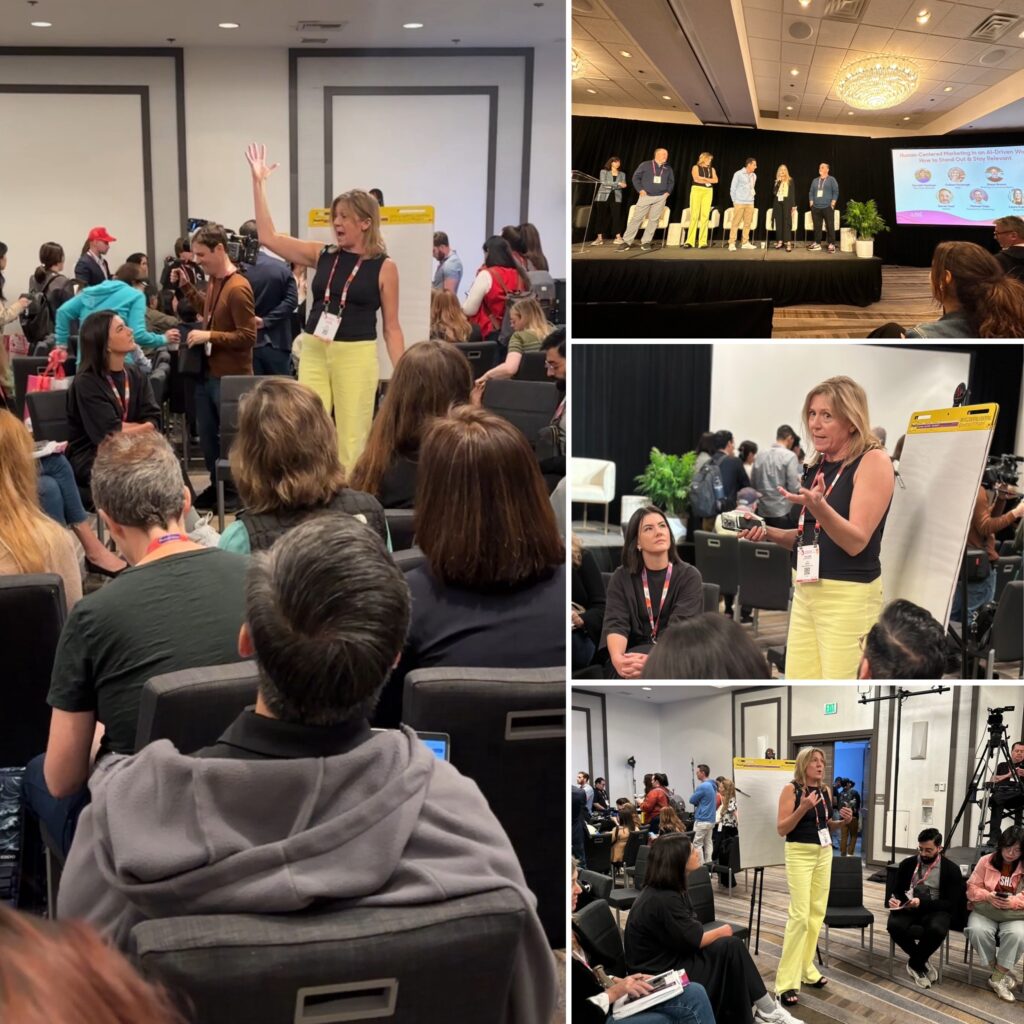
The advertising world has learned this lesson the hard way, as Peter Adams of Marketing Dive laid out for us at Expo West. When Svedka ran what was promoted as the first primarily AI-generated Super Bowl ad, consumer reaction was overwhelmingly negative. Nielsen IQ analysis has shown that even high-quality AI-generated content tends to be perceived as annoying, boring, or confusing. Major brands like Coke and McDonald’s have pulled AI-generated ads after backlash. The term “slop” was named word of the year by some dictionaries, capturing how consumers feel about low-quality AI content flooding the market.
But here’s what matters for the brands I work with every day: none of this means you should avoid AI. It means you should use it differently than the headlines suggest. AI’s real power for small and mid-size brands isn’t in generating consumer-facing creative. It’s in making your team faster, smarter, and more consistent at the work that drives your mission and revenue.
Start with Foundational Tasks, Not Flashy Ones
One of the most important distinctions I make when advising brands on AI is the difference between foundational and proactive uses. Foundational tasks are the operational backbone of your business: customer service, file organization, spec sheet management, pricing analysis. Proactive tasks are things like monitoring Reddit threads or engaging in real-time social conversations.
Focus on the foundation first. Get your house in order before you start experimenting with the cutting edge. This is where the ROI is most immediate and the risk is lowest.
Build a Customer Service Agent That Knows Your Brand
One of the highest-impact starting points is a customer service agent trained on your company’s specific information. At Zego, we deal with highly technical inquiries. Customers ask about test results for heavy metals, pesticide levels, and ingredient sourcing. These used to require my direct involvement or significant research time from my team.
We built an AI agent trained on our product data, test results, and company policies. It handles these scientific inquiries with consistent, accurate responses. The result: the number of questions escalated to me has dropped dramatically, and my team spends less time looking up routine information and more time on the work that actually requires human judgment.
The key is that this agent didn’t replace anyone. It freed up my team to do higher-value work. They still review the agent’s responses, update its training data, and handle the nuanced situations that require a human touch. We’re regularly monitoring for errors, like missing qualifiers in responses, and updating the agent accordingly.
Create a Brand Guardian for Consistent Content
A brand guardian is an AI agent trained on your company’s tone, messaging pillars, and content style. Think of it as a knowledgeable first draft machine that knows your voice. It can generate social media posts, newsletter content, and marketing copy that sounds like your brand, not like generic AI output.
The critical point: a human should always review and refine the output. The brand guardian handles the blank-page problem and ensures consistency, but your team brings the creativity, timing, and judgment that makes content resonate. For example, at Zego we have a scientific, evidence-based tone. For another brand name Zego recently acquired, Montana Gluten Free, the voice is relaxed and farmer-authentic. The brand guardian adapts to each, but a person makes the final call.
This is especially valuable for evergreen content. For timely events, crises, or cultural moments, human creativity and sensitivity remain irreplaceable.
Expand AI into Operations, HR, and Market Research
Once you have the foundational customer-facing applications running, expand inward. We’ve built AI agents for our plant manager to handle HR tasks, automate production scheduling, and generate personalized performance reviews based on job profiles and observed behaviors. These reviews include actionable development advice tailored to individual strengths and areas for growth.
For market research, I use AI tools to gather competitive pricing data across platforms, specifying parameters and requiring reputable sources. The results merge into actionable spreadsheets that would have taken days to compile manually. The time savings are significant, but more importantly, the consistency and thoroughness of AI-assisted research reduces the risk of missing critical competitive intelligence.
Choosing the Right Tools
Not all AI platforms are equal, and the right choice depends on the task. I recommend Claude for work that demands accuracy and lower hallucination rates, particularly for organizing files, updating spec sheets, managing image libraries, and pricing analysis. For deep market research, Perplexity is strong at sourcing and citing information. ChatGPT has broad general capabilities. Microsoft Copilot integrates well if your team is already in the Microsoft ecosystem.
Privacy and security matter. Especially in team environments, review the data policies of any AI tool before feeding it proprietary information. Set clear internal guidelines about what data can and cannot be entered into AI platforms.
For content creation workflows, tools like Riverside can automate the extraction of social media clips, blog drafts, and other assets from recorded video. The pattern is consistent: AI generates the first pass, your team refines it.
Getting Your Team on Board
The biggest barrier to AI adoption isn’t the technology. It’s the people. As Gartner research has emphasized, AI’s challenges are fundamentally people problems. Some team members will be eager to experiment. Others will be skeptical or anxious about what AI means for their roles.
Start with roles where the benefit is most obvious and immediate, like customer service. Identify your “quick start” team members, the ones who are curious and willing to learn, and let them lead adoption. But don’t leave your more analytical or cautious staff behind. Involve them in testing and feedback. Their skepticism often catches errors and edge cases that enthusiastic early adopters miss.
Invest in targeted training. A general “here’s what AI can do” session isn’t enough. People need to see how AI applies to their specific role and daily tasks. Workshops, hands-on classes, and ongoing education make the difference between a tool that collects dust and one that transforms how your team works.
And be direct about the message: we are empowering you with better tools, not replacing you. When people understand that AI handles the repetitive, time-consuming work so they can focus on what they do best, resistance drops and adoption accelerates.
A Note on Consultants and Staying Current
If you bring in outside help for AI projects, vet their expertise carefully. The field moves fast. Certifications from six months ago may already be outdated. Look for consultants who are actively working with the latest tools, not just teaching from a curriculum they developed last year. Subscribe to AI-focused newsletters, join mastermind groups, and allocate time for your own ongoing learning. The brands that stay current will have a compounding advantage.
What to Do Next
If you haven’t started yet, take a class. I took a 12-week deep dive with The Uncommon Business that met about two hours a week, but the real value went beyond the sessions themselves. There were additional workshops, a very active Slack channel, and a ChatGPT agent built specifically for the class, which meant the instructor was essentially available at 2 AM to pull you out of a rabbit hole and keep you making real progress.
In all, I spent about 10-15 hours a week learning and building. I started saving three hours in the first week alone. Now I’d estimate I save 3-5 hours a day. The 12-week Automate to Accelerate class I took is only offered twice a year and opens for sign-ups April 28. But they have a “Superhuman” 3-day class April 21, 23, and 28 that is a great starting place and only $47 (the A2A cost is in the thousands).
Eventually, I want to commit my reclaimed time to nature, friends, and family. But for now, I’m in the mastermind group that graduated from the class, and I’m still building—using everything I’ve learned to make ZEGO and CIVC as successful in mission and revenue as they can be. That’s the real point of all of this: AI doesn’t replace the work that matters. It gives you more time and capacity to do it.
The Bottom Line
AI is not a strategy. It’s a tool that makes your strategy executable faster and at higher quality. The brands winning with AI right now are not the ones generating flashy AI content for Super Bowl ads. They’re the ones using AI to answer customer questions accurately at 2 AM, keep their brand voice consistent across every channel, give their plant manager real-time scheduling support, and free their teams to focus on the creative, strategic, relationship-driven work that no algorithm can replace.
Start with the foundation. Empower your team. Keep humans in the loop. That’s how you use AI to meet your mission and grow revenue—not by replacing what makes your brand human, but by giving your people superpowers.